21
Sep 26
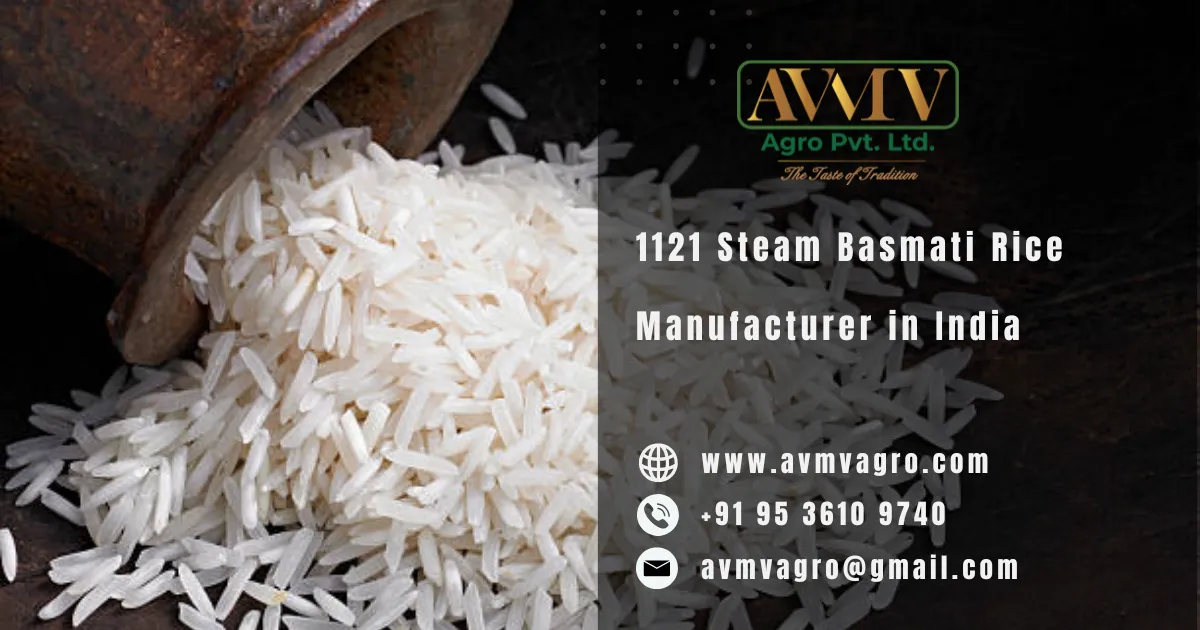
1121 Steam Basmati Rice Manufacturer in India
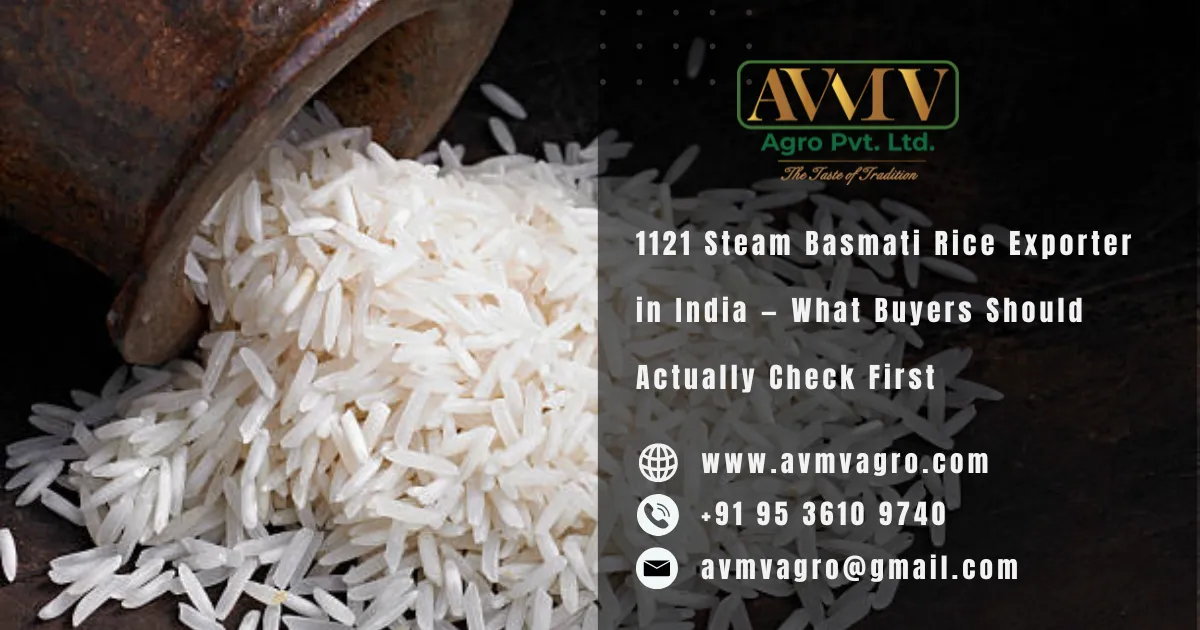
Sourcing Basmati rice from overseas isn't as simple as picking the lowest quote. Grain length, moisture content, ageing, and the manufacturer's own quality checks all decide whether a shipment lands in good shape or comes back with complaints. If you're evaluating a 1121 Steam Basmati Rice Manufacturer in India, there's a bit more to look at than the price sheet — and that's what this guide covers.
What Makes 1121 Steam Basmati Different
1121 is the variety most buyers ask for first, and for good reason. The grain is unusually long — often extending to twice its original length after cooking — and it holds its shape without turning sticky. The "steam" part matters too. Steaming the paddy before milling firms up the starch structure, which means fewer broken grains during processing and a rice that cooks up separate and fluffy rather than clumped.
None of that happens by accident. It comes down to how carefully a mill controls temperature and timing during steaming, and how much the paddy is allowed to age before it's processed. A rushed batch looks fine in a sample bag and falls apart in the pot.
How to Vet a Manufacturer Properly
Certifications and Documentation
Ask for the basics before anything else: FSSAI licence, APEDA registration, and a phytosanitary certificate if you're importing. A manufacturer that hesitates to share these, or offers vague answers about lab testing, is telling you something. Pesticide residue reports and moisture analysis should be available on request — not buried behind a sales call.
Processing and Steam Quality
Ask how long the paddy is aged before milling. Most reputable manufacturers age their 1121 stock for at least a year, sometimes longer, because ageing improves the rice's elongation and aroma. If a supplier can't tell you the ageing period, or the answer changes depending on who you ask, that's worth a second thought.
It also helps to request a physical sample rather than relying on photos. Grain length, broken percentage, and colour uniformity are easier to judge with rice in hand than in a WhatsApp message.
Beyond 1121: Other Varieties Buyers Often Ask About
Most manufacturers dealing in 1121 also handle a wider basket of rice, and it's worth knowing what else is on the table.
1121 Sella Basmati Rice Manufacturer in India listings usually mean parboiled 1121 — the grain is treated before milling, which gives it a slightly amber tint and a firmer bite. Buyers supplying restaurants and catering often prefer Sella over raw for exactly that reason; it holds up better in bulk cooking and reheats without going mushy.
If you're comparing suppliers more broadly, you'll also come across PR 11 Rice Exporters in India and Parmal Rice Manufacturer in India — both non-Basmati varieties aimed at the domestic and budget export market rather than the premium Basmati segment. They're worth knowing about even if they're not what you're ordering, since a manufacturer that handles both gives you a sense of their overall milling capacity.
For buyers after something with a stronger aroma at a mid-range price, Sugandha Rice Exporters in India come up frequently — Sugandha sits between 1121 and the shorter aromatic varieties in terms of grain size and cost. And if short-grain rice is part of your order, look for a Sona Masoori Raw Rice Manufacturer in India rather than assuming your Basmati supplier stocks it as an afterthought; Sona Masoori has its own milling requirements and quality checks.
If your order needs to move overseas rather than sit in a domestic warehouse, confirm the manufacturer also functions as an 1121 Sella Basmati Rice Exporter in India — not every mill handles export documentation and container loading in-house, and that gap can add weeks to a shipment.
Why AVMV Agro
AVMV Agro Private Limited processes and exports Basmati rice, including 1121 Steam and Sella variants, from its facility in India. The company handles paddy sourcing, steaming, milling, and export documentation under one roof, which cuts out the delays that come with juggling multiple middlemen. Buyers working with AVMV Agro can request grain samples, lab reports, and ageing details directly rather than chasing them through a broker.
FAQ
What's the difference between 1121 Raw and 1121 Steam Basmati?
Raw 1121 is milled straight from dried paddy, while Steam 1121 is steamed first. Steaming firms up the grain, reducing breakage and giving a firmer, separate texture once cooked.
How long is 1121 Basmati usually aged before export?
Most manufacturers age it for 12 months or more. Longer ageing tends to improve elongation and aroma, though it also raises the price slightly.
Can one manufacturer supply both Basmati and non-Basmati varieties?
Yes — many mills, AVMV Agro included, process Basmati alongside varieties like Parmal or Sona Masoori, since the milling infrastructure overlaps even though the grain standards differ.
What documents should I request before placing a bulk order?
FSSAI licence, APEDA registration, a recent lab test for pesticide residue and moisture, and — for export orders — a phytosanitary certificate.
Conclusion
Picking a 1121 Steam Basmati Rice Manufacturer in India comes down to a handful of checks: proper documentation, honest answers about ageing and processing, and a sample you can actually inspect. Manufacturers who supply a broader range — Sella, Sugandha, Sona Masoori, Parmal — are usually a safer bet simply because it shows established milling infrastructure rather than a single-product operation. AVMV Agro covers that range and handles both domestic supply and export from one facility, which is worth factoring in if you're placing a recurring order rather than a one-off.